Jazzing up the Archives: Bristol’s Wartime Jazz Scene
Posted on by Fay Whitfield.
By Mary Milton, Rights Clearance and Cataloguing Mentor, Sounds of the South West Project
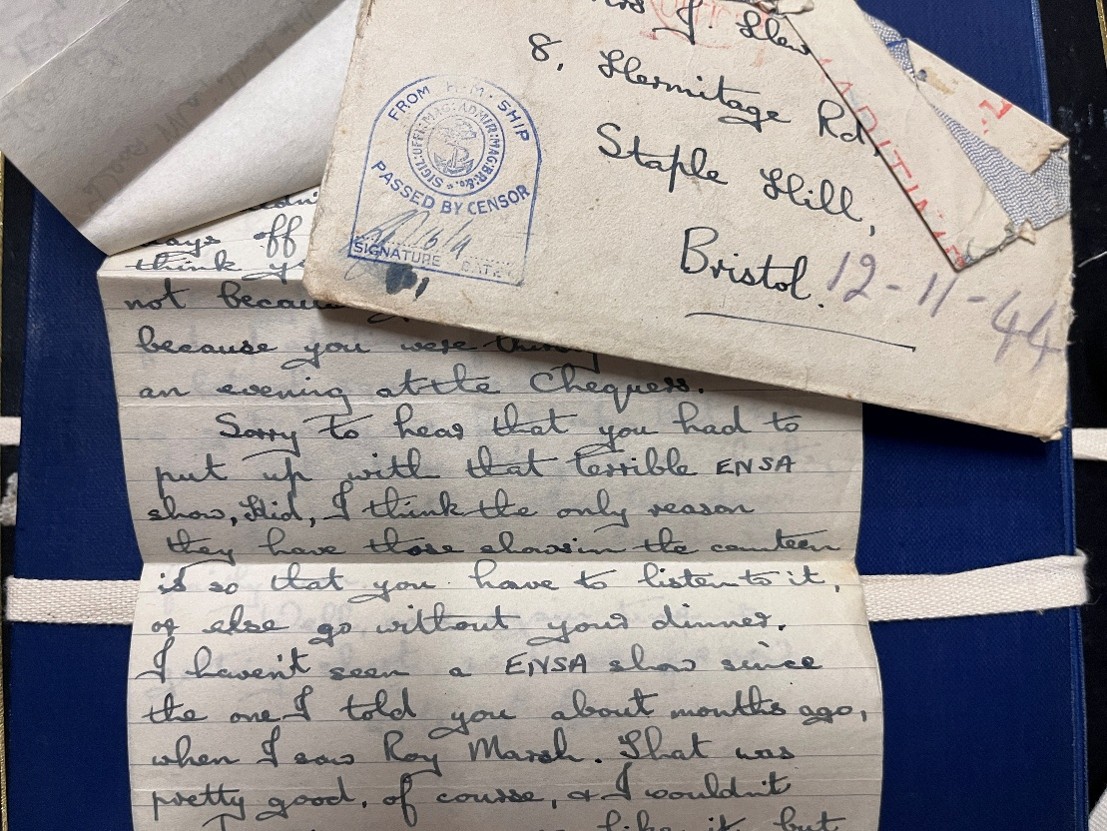
Image: Bristol Archives 44286/132 Fred Llewellyn writes home from the Royal Navy to his parents and brother Jack who has seen an awful ENSA show. Fred replies that he saw one that was “pretty good”. Dated 12 Nov 1944.
In today’s blog, Mary discusses John Berry and his interviews exploring the jazz scene in Bristol during the Second World War.
John is a Bristol musician and academic who recorded 27 oral history interviews and 92 live music performance while researching his PhD thesis ‘How people learn to be Jazz musicians – case studies in Bristol’ (2004). His collection is held at Bristol Archives and is now being digitised thanks to Sounds of the South West (SotSW), to preserve it for the future. SotSW is generously funded by The National Lottery Heritage Fund.
In the late 1980s and early 1990s, John Berry recorded a series of interviews with jazz musicians in Bristol. He wanted to know how people learn to play jazz. In the process of answering this question he explored a vast range of topics. The interviews document a generation of musicians who grew up with jazz from the Second World War era and were influenced by “modern jazz” coming from the United States.
The Second World War is a common theme with John’s interviews. It is clear the war had a huge influence on the musicians’ development and the music scene in Bristol. Many of the interviewees had been in the armed forces. Compulsory service in the British Army began in 1939 but did not end until 31 December 1960.
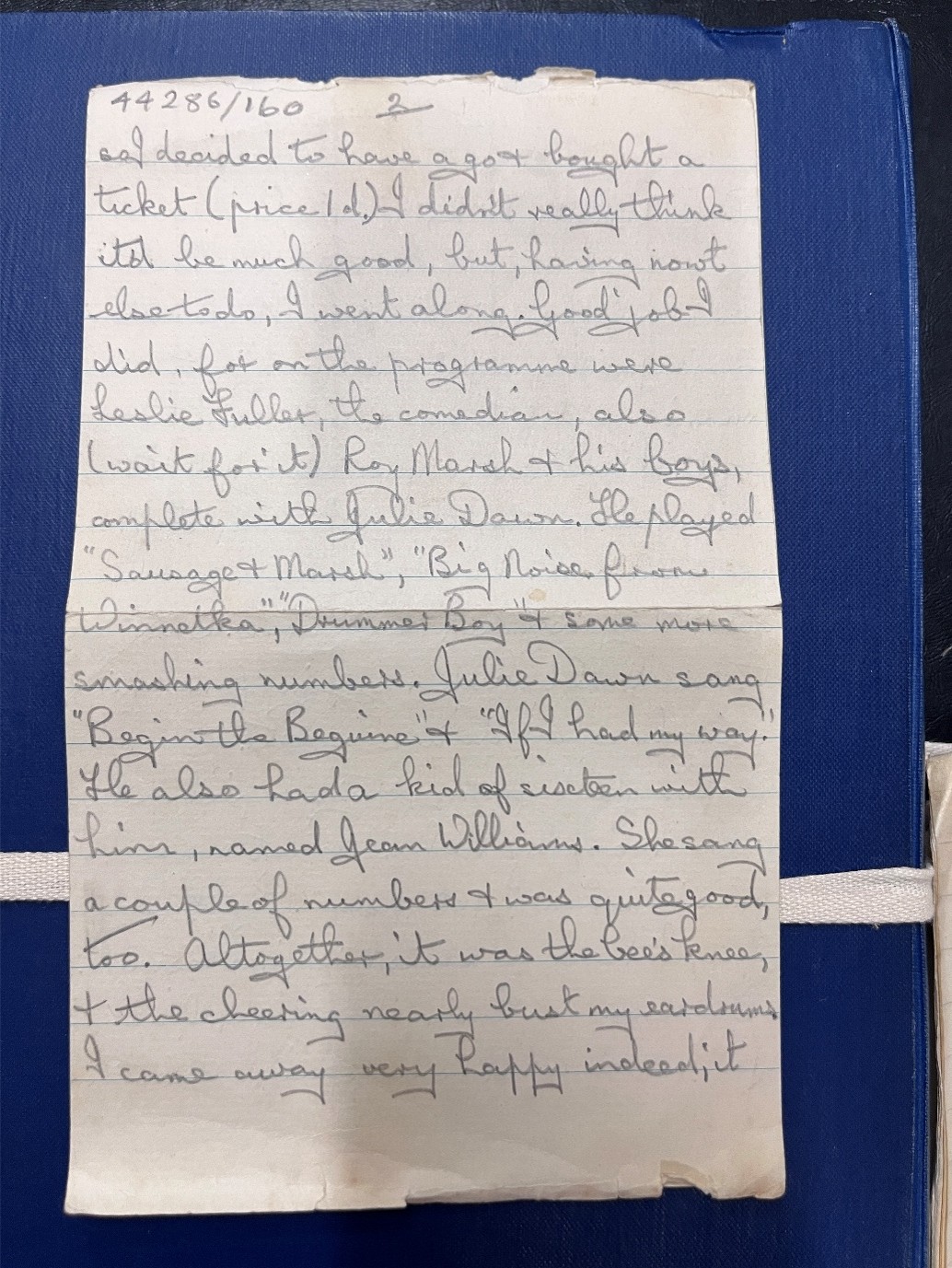
Image: Bristol Archives 44286/160 Fred Llewellyn describes seeing some big names at an ENSA show including singer Julie Dawn, it was “the bees knees” and he came away “very happy indeed.”
Many of John’s interviewees continued their musicianship within the forces and some were part of the Entertainments National Service Association (ENSA), set up in 1939 to entertain and raise morale amongst the troops. ENSA was sometimes cruelly referred to as “every night something awful.” Standards varied enormously but featured some well-known names including Peter Cushing, Terry Thomas, Peter Sellers and Vera Lynn. There is evidence of this in Bristol Archives other wartime collections, with members of the services recording in diaries or writing home about ENSA performances.
Jack Toogood spent his Second World War service playing in small bands alongside his military duties. After the war, he was part of a touring concert party with actor Hugh Paddick. Hugh later rose to fame for appearing with Kenneth Williams in the BBC radio show Round the Horne and Don Lusher who became a well-known jazz trombone player.
From Bristol Archives 45673/1/4/1a, 30 mins in. (c) John Berry & estate of Jack Toogood. Licensed to Bristol Archives for non-commercial use.
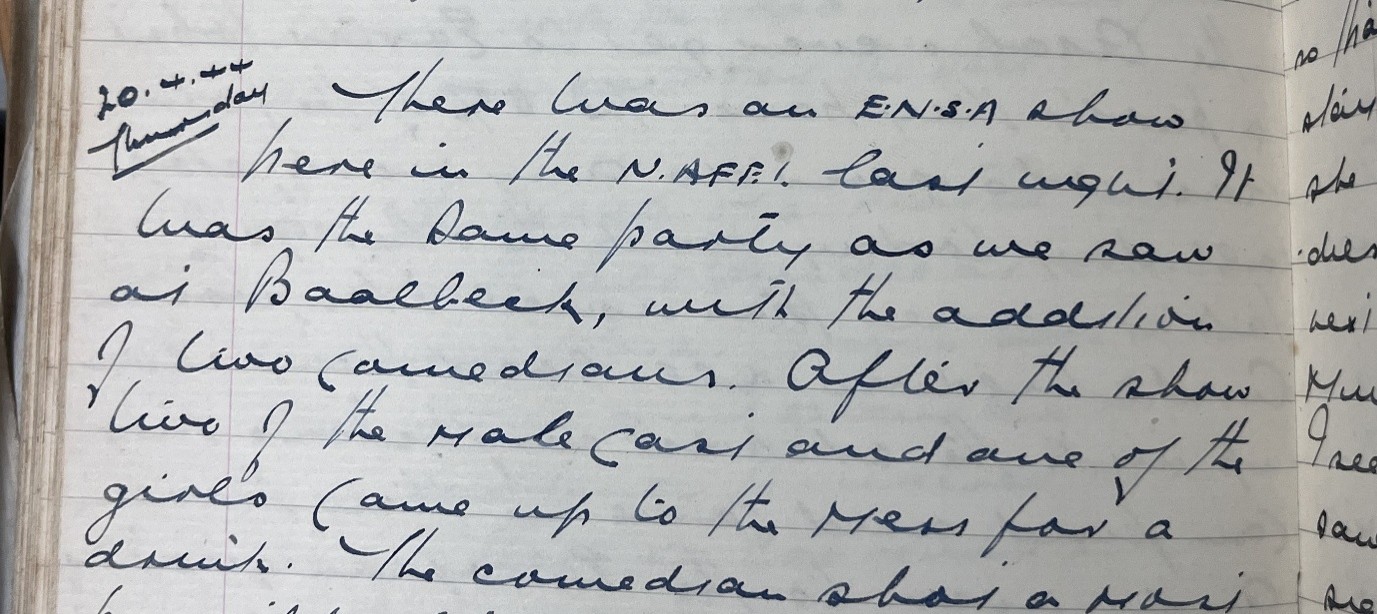
Image: Bristol Archives 45152/1/4/102-104 John Norman Davey (1918 – 2006) Gloucester Regiment writes in his diary on 20 April 1944, “An ENSA concert at the mess last night, same party as Baalbeck with an extra two comics..” © Elizabeth Durbin
The war changed the lives of these young men, who were presented with choices and opportunities they would never have had in civilian life. Mike Wilkins was faced with the choice of becoming a pilot or continuing his musicianship for which there were also opportunities in the Airforce.
From Bristol Archives 45671/6/1a, 15 mins 6 secs in. (c) John Berry & estate of Mike Wilkins. Licensed to Bristol Archives for non-commercial use.
Like Mike, Bob Bennett was given the chance to do other jobs within the military but spent his two years of National Service in the Royal Signals Band as a second violin the light orchestra.
From Bristol Archives 45673/1/11/, 5 minutes 34 secs in © John Berry & Bob Bennett. Licensed to Bristol Archives for non-commercial use.
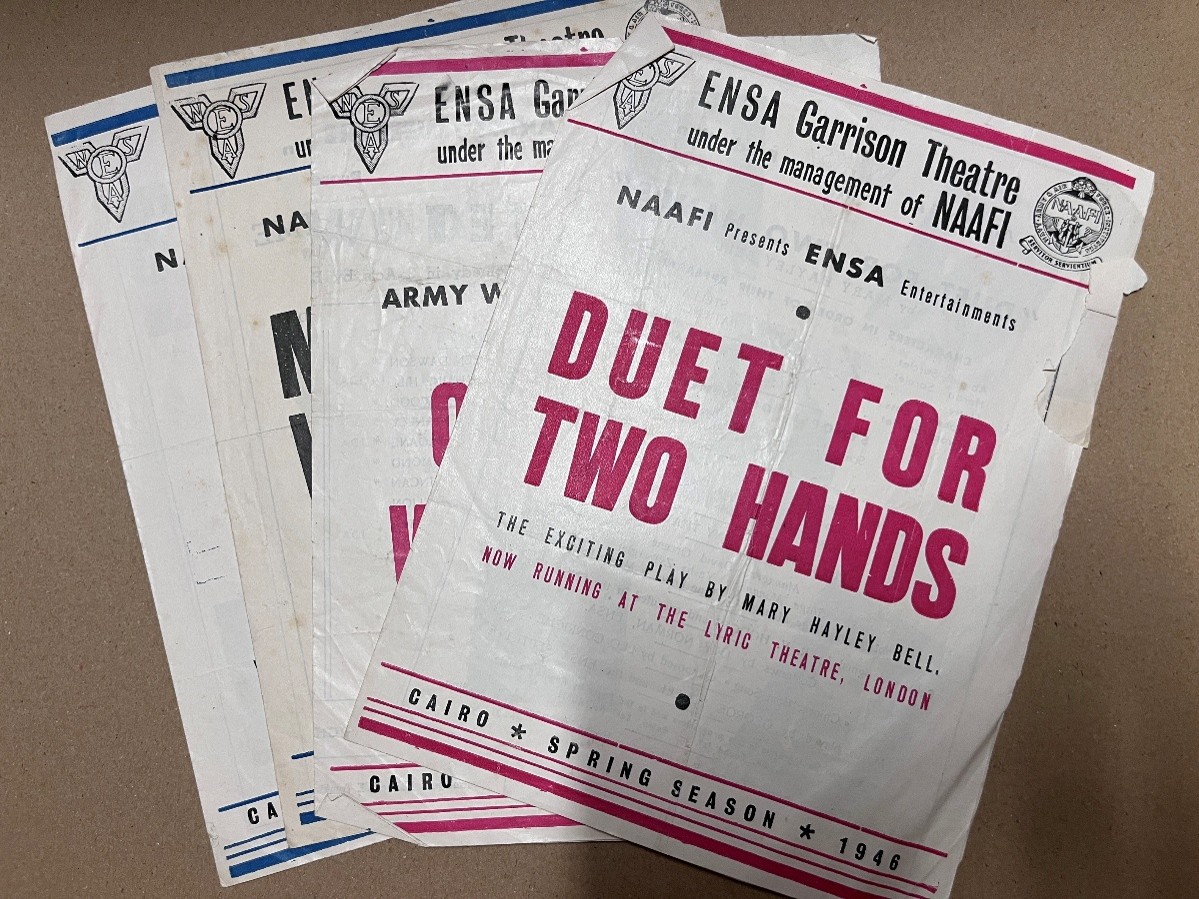
Image: Bristol Archives 44103/8 Programmes for performances programmed by ENSA
Back in Bristol, for drummer Jeff Smith in 1945 performing in ENSA was part of the music scene in Bristol. He played in factories, presumably entertaining those doing essential war work. He has an interesting theory about the introduction of jazz improvisation.
From Bristol Archives 45673/1/5/1a, 3 min 50 secs in. © holder unknown Email [email protected] for further information
The sheer number of men missing from Bristol during the war and the destruction of some venues influenced the scene. Saxophone and keyboard player, Jack Fear told John about the opportunities and experience he gained in Bristol during that time:
From Bristol Archives 45673/1/3/1a, 3 min 50 secs in. © holder unknown Email [email protected] for further information
Those coming home from the army saw things differently, it was not only the cityscape that had changed. Some like guitar player Jack Toogood who had been professional musicians found the working environment was very different.
From Bristol Archives 45673/1/4/1a, 1 min 40 secs in. (c) John Berry & estate of Jack Toogood. Licensed to Bristol Archives for non-commercial use.
John Berry’s recordings document this time as the men continued to play music. Some worked as professional musicians, while others played part-time alongside other jobs. Some became teachers and helped train the next generation of musicians. All of them had their lives shaped by music.
You can listen to John Berry’s complete collection of interviews with jazz players at Bristol Archives.
To read more about his collection, visit: Jazzing up the archives: introducing John Berry | Bristol Museums
 About The National Lottery Heritage Fund
Using money raised by National Lottery players, The National Lottery Heritage Fund supports projects that connect people and communities with the UK’s heritage. Sounds of the South West is made possible with The National Lottery Heritage Fund. Thanks to National Lottery players, we have been able to support this creative project to preserve and create new access to our shared audio heritage.