Digitising our Islamic Collection
Posted on by Fay Whitfield.
By Elisa Ricci, Documentation Assistant at Bristol Museum & Art Gallery (2024-2025)
A new project to digitise the museum’s Islamic collection began in June 2024. The collection includes ceramics, textiles and metalwork.
 We are grateful to Bristol Museums Development Trust who have funded this project with support from an anonymous legacy and John and Susan Hart.
The first part of the project focused on photographing pottery sherds from archaeological excavations in Fustat, medieval Cairo.
Over the course of the year, we digitised 237 pottery sherds amongst other things. They are fascinating because of their bright colours, unique shapes, and interesting history. As a Documentation Assistant, I looked into the Museum’s archive to learn more about them. A document shows that the Bristol Museum bought the sherds in 1919 from the Arab Museum in Cairo.
Fustat was the first Muslim capital of Egypt before Cairo, founded by the Fatimids in 969. Even after that, it remained a major centre of population and an important industrial hub. The city was largely destroyed in the 12th century to prevent it from falling into the hands of the Crusaders. By the 15th century, it had become Cairo’s rubbish dump. This long history of use and disposal created layers of waste around the city that preserved countless objects. In the 20th century, archaeologists uncovered millions of finds from the site. These discoveries provided vital evidence about the types of pottery produced in Egypt and also revealed imported ceramics, including pieces from China, evidence of ancient trade routes.
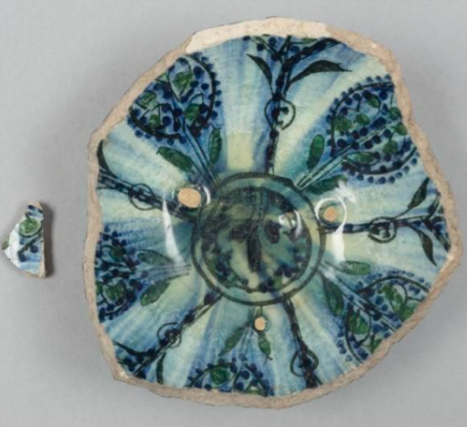
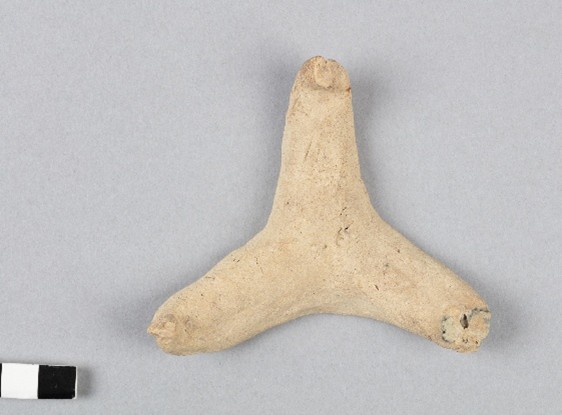 Pottery production in Fustat began in the 9th century (801-900 CE) and developed further during the Roman invasions in the 10th century (901-1000 CE). Special kilns were built, and one was discovered in the round tower of the Roman fortress. Many of the pottery sherds bear spur-marks. This bowl base and its fragment (N8137.234) with bright blue and green floral decoration has three small circular cream-coloured marks—these are traces left by a tripod stand used to stop its glaze sticking with other pots during firing.
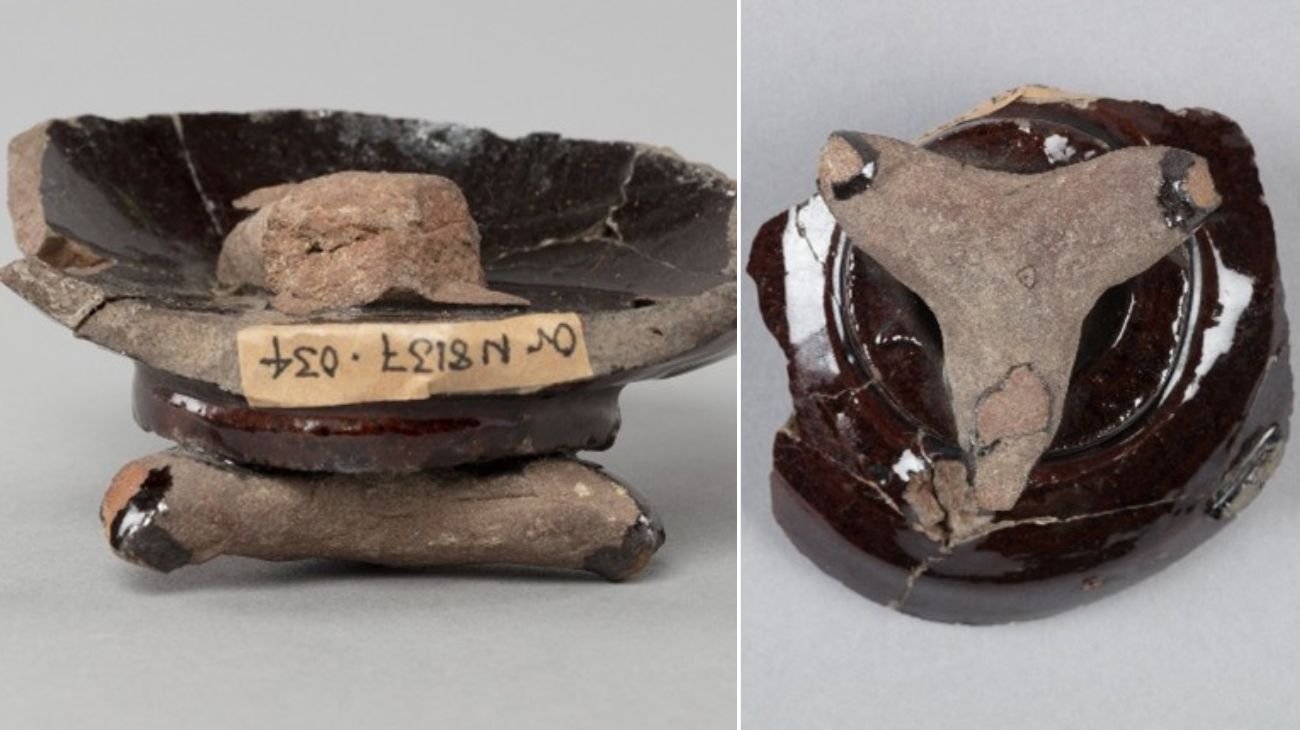
N8137.034 stand melted
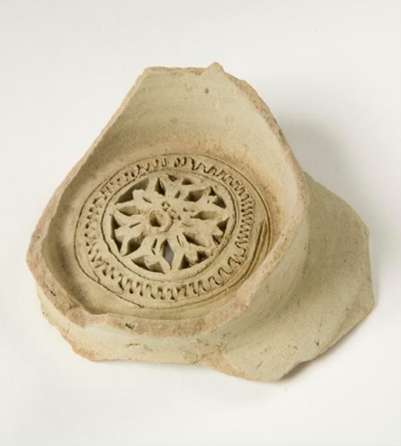 Another intriguing object is the base of a jug or water bottle (N8137.026). It is decorated with pierced and incised geometric patterns. These designs, which sometimes include animal shapes, are thought to have acted as filters to prevent flies and dust from getting into jugs and other vessels. Another school of thought suggests that the decorative openings were designed to create different sounds as water was poured in. The exact date of these objects is unclear, but they may have been made during the Ayyubid dynasty (1169-1250). Egyptians were especially skilled in designing such filters, and several jars with similar features have been found in excavations at Fustat. These were sometimes glazed or decorated with lustre paint.
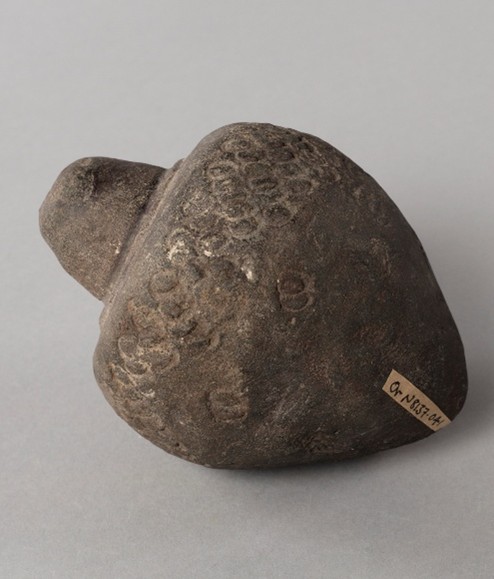 Another object that has sparked different interpretations is this conical vessel (N8137.041). Some researchers believe it was used to hold wine, beer, or perfume. Others suggest it might have been an early type of grenade, filled with oil and used like a Molotov cocktail. These vessels are made from hard clay, fired at high temperatures, and covered with a purplish slip. This particular example, found in Fustat, is decorated with a stamped “fish-scale” pattern in vertical rows, and dates to the Mamluk period (1250–1517).
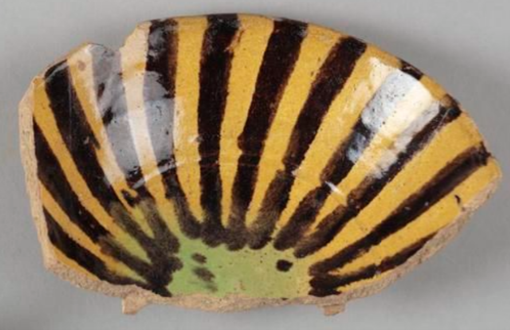 One of the most impressive pieces I have seen during this digitisation project is this colourful pottery sherd (N8137.086). The bowl fragment shows bold, dark brown stripes radiating over a warm yellow glaze, with a touch of green at the centre. This decoration is typical of 10th and 11th century pottery made in Egypt. The style developed from earlier techniques first used in Iraq in the 9th century, where potters created glazes that were splashed, streaked, and mottled to produce lively, colourful effects. Even though the bowl is broken, it gives us a strong sense of the creativity and skill of the people who made it.
This digitisation project has allowed us to uncover new details about these objects. It has also provided an opportunity to share their beauty and stories with the public and researchers worldwide. By making these materials more accessible, we not only preserve them for future generations but also deepen our understanding of the rich cultural heritage of our collections.
In the second part of my project, I will focus on Islamic carpets and tiles — stay tuned for the next update!
In the meantime, some of these pieces are on display in the Ceramics Gallery at Bristol Museum & Art Gallery, and more images are available to explore in our online collections.